
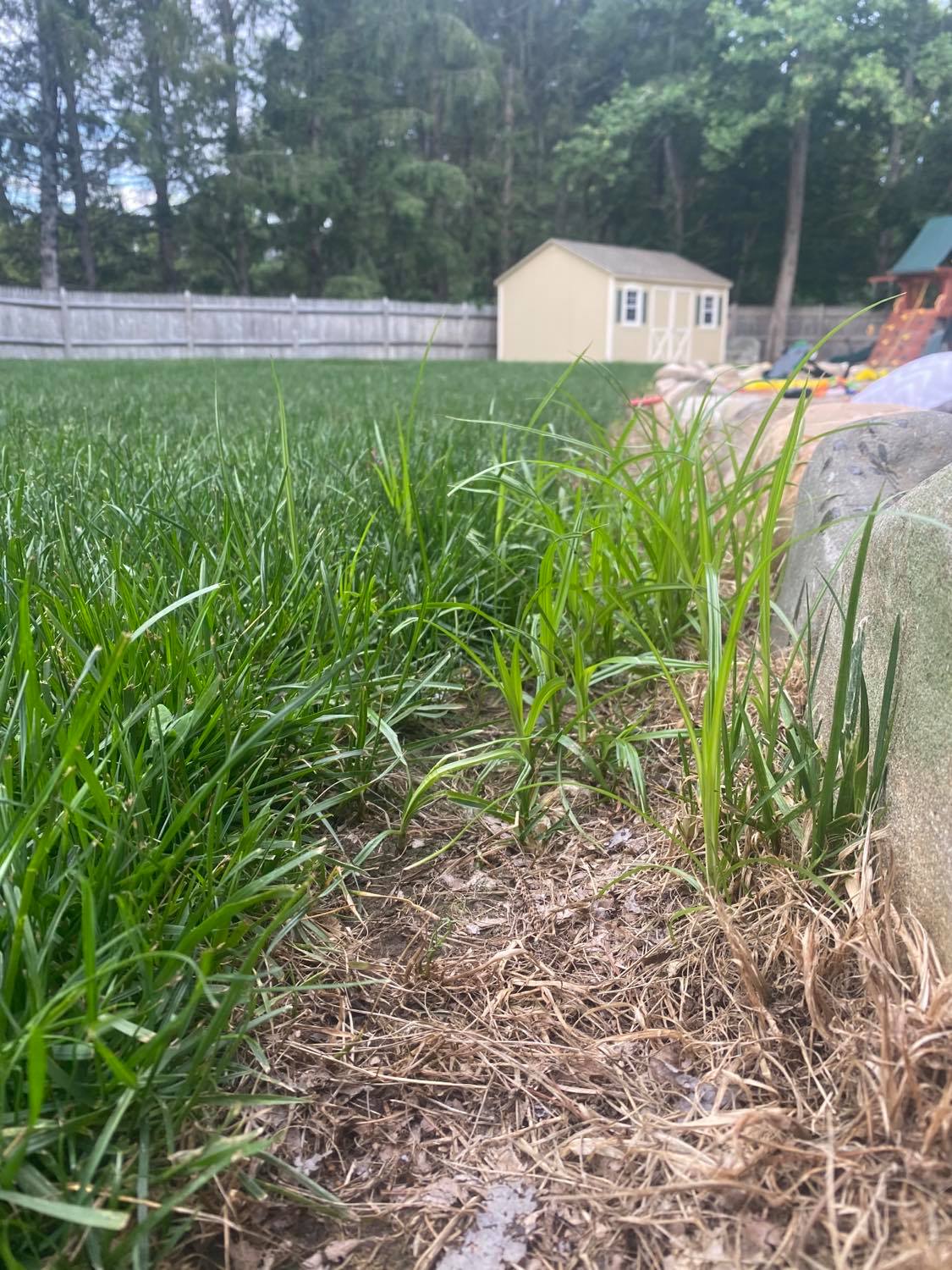

Nutsedge, often called nutgrass, is one of the toughest weeds to eliminate from a lawn. It’s a perennial weed that spreads aggressively through rhizomes and tubers (nutlets) underground. Unlike regular grass, nutsedge grows faster, stands taller, and has triangular stems that make it easy to identify—if you know what to look for.
I’ve treated countless lawns with nutsedge here in Massachusetts, and with the right tools and timing, you can get rid of this stubborn weed without damaging your grass. Let’s dive into the methods I use and recommend to my clients.
What Is Nutsedge?
Nutsedge is a grass-like weed that thrives in wet, poorly drained soils but can survive in dry conditions too. It’s not a true grass—it’s a sedge—and its unique features make it easy to spot:
- Triangular stems (unlike round grass stems).
- Light green leaves with a waxy appearance.
- Rapid growth, outpacing surrounding grass.
- Flowers in mid-to-late summer—yellow nutsedge with pale yellow blooms and purple nutsedge with darker flowers.
Because nutsedge spreads through rhizomes and tubers rather than seeds, traditional pre-emergent herbicides won’t work. That’s why treatment focuses on post-emergent herbicides and cultural practices to prevent regrowth.
Where and How Nutsedge Thrives
Nutsedge thrives in low-lying, moist areas—lawns with poor drainage or overwatering are prime targets. It’s most active during the summer months, especially when temperatures rise.
Even if your lawn isn’t overwatered, nutsedge’s deep root system can find hidden moisture. Once established, it spreads underground through tubers, creating patches that are hard to eliminate without the right approach.
How to Identify Nutsedge
Identifying nutsedge early is key to controlling it. Here’s how to spot it:
- Growth Rate: Grows faster and taller than lawn grass.
- Stem Shape: Triangular stems (roll it between your fingers to feel the edges).
- Leaf Color: Light green compared to darker turfgrass.
- Flowers: Yellow or purple clusters, depending on the type.
If you try pulling it by hand and it breaks off easily, leaving roots behind, you’re likely dealing with nutsedge. This resilience is why proper herbicides are often needed.
How to Kill Nutsedge Plants
Manual Removal
Pulling nutsedge by hand can work for small patches, but you must dig deep to remove the rhizomes and tubers. If any fragments are left behind, new shoots will sprout.
I don’t recommend pulling nutsedge in larger infestations since it often leads to worse regrowth.
Post-Emergent Herbicides (Recommended)
For larger areas or persistent nutsedge, I always use post-emergent herbicides that target this weed specifically. Here are my go-to products:
- Sedgehammer (Halosulfuron): Selective herbicide that kills nutsedge without harming most turfgrasses.
- Dismiss NXT (Sulfentrazone and Carfentrazone): Fast-acting and works well for tougher infestations.
- Certainty Turf Herbicide: Effective for severe nutsedge problems and professional-grade applications.
Application Tips:
- Apply when nutsedge is actively growing (early summer for best results).
- Add a non-ionic surfactant to help the herbicide stick to leaves.
- Follow label instructions closely to avoid damaging your grass.
I’ve had the best success treating nutsedge with Sedgehammer and a surfactant, especially when applied during warm weather. In most cases, the weed starts yellowing within a week and dies completely within 2–3 weeks.
How to Prevent Nutsedge from Sprouting
The best defense against nutsedge is maintaining a healthy lawn and eliminating the conditions that encourage its growth. Here’s what works for me:
- Improve Soil Drainage: Aerate compacted soil and correct drainage issues to prevent excess moisture.
- Maintain Proper Mowing Heights: Avoid cutting grass too short—it can stress your lawn and create openings for nutsedge.
- Overseed Thin Areas: A thick lawn helps crowd out weeds and reduces bare spots where nutsedge can take hold.
- Water Smartly: Avoid overwatering and fix areas where water pools after rainfall.
Important Note: Pre-emergent herbicides like Prodiamine don’t work on nutsedge because it spreads through rhizomes and tubers, not seeds. Focus on post-emergent treatments and prevention instead.
FAQs About Nutsedge
Does pulling nutsedge make it worse?
Yes—pulling nutsedge can leave rhizomes and tubers behind, causing it to spread even more. Chemical treatments are more effective.
What kills nutsedge but not grass?
Selective herbicides like Sedgehammer and Dismiss NXT target nutsedge while sparing turfgrass when applied properly.
Can vinegar kill nutsedge?
No—vinegar isn’t strong enough to kill nutsedge and may harm surrounding grass. Stick to selective herbicides for reliable control.
Can nutsedge be permanently removed?
It’s tough to remove permanently, but with consistent treatments and proper lawn care, you can control it long-term and prevent it from spreading.
What is the best time to treat nutsedge?
Treat nutsedge in early summer when it’s actively growing. Avoid spraying during droughts or cold weather for best results.
Take Back Your Lawn with Lawn Phix
Nutsedge might be one of the most frustrating weeds to tackle, but with the right herbicides and lawn care practices, you can eliminate it and keep it from coming back. I’ve seen these methods work on hundreds of lawns, and they can work for you too.
If you’re dealing with a nutsedge problem and need professional lawn care in Massachusetts, contact Lawn Phix today—I’m here to help!
The nutsedge plant is a perennial weed and scourge of a healthy lawn. Also known as nut grass, nutsedge prefers moist soil but somehow seems to thrive even in conditions that are not entirely to its liking. Nutsedge spreads aggressively, especially in hot, humid climates. Generally paler in color than typical turf grass, nutsedge also te


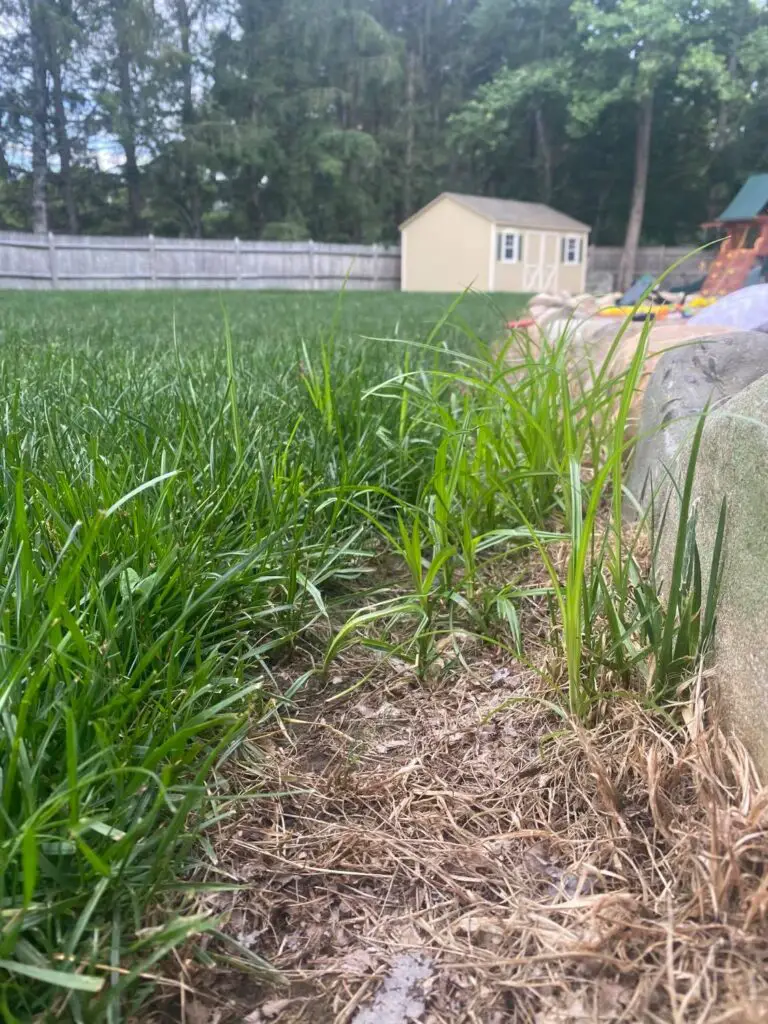
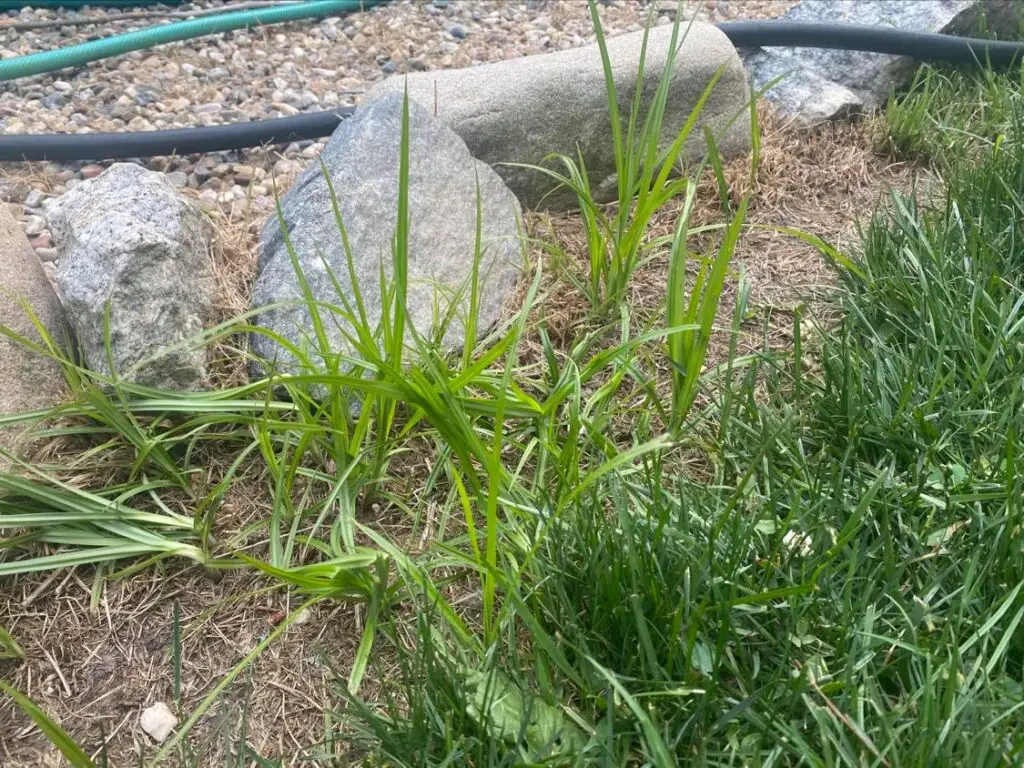
can’t you just glyphosphate it if its growing in your mulch/garden areas…? as seen from the pics provided…not really on turf
Hi Bob. Glysophate can be used, though we’ve experienced mixed results. When Nutsedge is growing hard in the summer, the glyphosate doesn’t do a good job translocate since it’s a slow mover, so nutsedge can outgrow the control. Also keep in mind (for others reading this) that glysophate is non-selective and will damage/kill everything it comes in contact with.
Is it possible to treat nutsedge in the same growing season with halosulfuron AND sulfrentrazone? If so, is there any protocol to follow?
If you were to go this route, we recommend you treat with Sulfentrazone early season when the plant first starts to grow, as Sulfentrazone has been known to show success at translocating and providing control of immature stands very early on. For the late summer/early fall treatment, Halosulfuron would then be the better product.