No AI pledge. Authored and reviewed by Mark, not robots. Learn more.
If you purchase through one of the links on our site, we may receive a small commission at no extra cost. I've personally used these products and provided an honest opinion. Your support helps maintain our free content, including lawn care guides and calendars. Learn more.
LAWN PHIX PRO TIPS
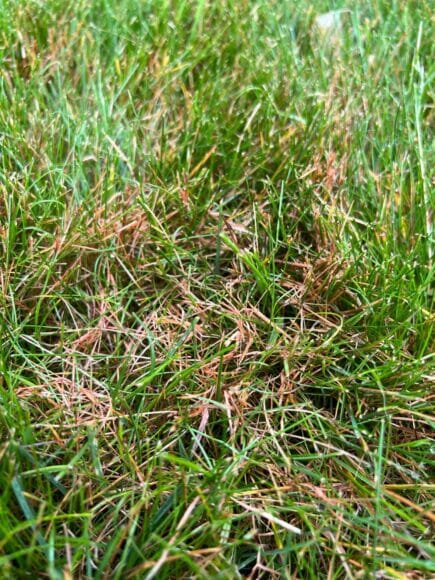
With this year’s excessive rain and overcast, I witnessed a lot of red thread in the spring of 2023. Here are a few quick bullet points on managing red thread disease in your lawn.
Red Thread thrives in the springtime with prolonged wetness on grass blades, limited sunlight, and lack of nitrogen.
Fine fescue, in particular, is the most susceptible cool-season grass to red thread fungus.
Prolonged red thread will form mycelium, which looks like pink cotton balls on the turf.
A quick-release nitrogen fertilizer can help “push out” the unsightly red thread.
Preventative and curative applications of fungicides containing propiconazole, azoxystrobin, or myclobutanil should be applied to help treat and stop the growth of red thread.
How to get rid of Red Thread Lawn Disease
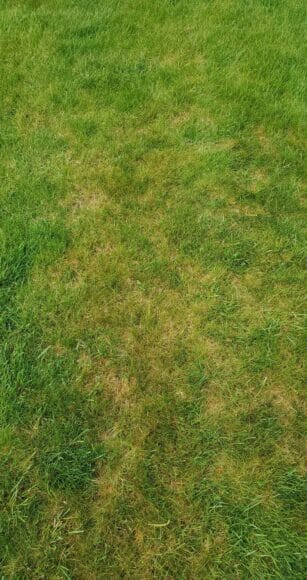
Red thread disease typically appears during cool, humid periods in the spring and fall, leaving lawns with irregular patches of pink or reddish discoloration. As infected grass blades die, they often turn a dull, tan color. This disease most commonly affects cool-season grasses such as perennial ryegrass, Kentucky bluegrass, fine fescues, and bentgrass. The presence of red or pink threadlike structures on the leaf tips indicates active infection. While red thread can make a lawn look unsightly, it rarely causes permanent damage and can be managed effectively with proper lawn care practices. Read on to learn how to treat and prevent this common turf issue.
Table of Contents
What Is Red Thread Fungus?
Lawns are at greatest risk of red thread fungus in the spring, but it can also occur in the fall and even winter. Laetisaria fuciformis grows with sufficient warmth and moisture. The disease is generally spread from leaves or stems from the previous growing season that are affected with red thread disease. The disease usually enters grass blades at their cut tips. Once it does, it quickly spreads to the rest of the plant. Often, it’s foot traffic and mowers that spread the mycelium.
The heavy or persistent periods of spring rains contribute to the growth of red thread disease. Red thread fungus is sometimes confused with red patch as both diseases feature similar symptoms.
Signs of Red Thread Fungus
Red thread fungus is marked by signs such as pinkish red grass blades, the grass blades appear to have a ragged look, and irregularly shaped patches will break out. The patches tend to grow up to about three feet in diameter, filled up with infected grass. As the fungal disease progresses, its ‘red threads’ tend to become more pronounced. After it rains or your lawn is irrigated, the grass will appear a darker red. As it dries, it takes on its pink hue. Infected blades show ‘antler-like’ threads. The mycelium might appear weblike, especially when lawn conditions are wet and the weather is humid.
Red thread fungus spreads quickly across infected grass blades, often causing visible damage within just a couple of days. While it may kill the leaf tissue, it does not affect the crown or roots of the plant. As a result, the grass can usually recover with proper care. Temperature and humidity play key roles in the development and spread of the disease.
Red Thread Disease Cycle
Lawns are most susceptible to red thread when temperatures range between 65–75°F and humidity is high. Unlike many turf diseases that spread primarily through spores, red thread spreads through fungal mycelium that can lie dormant in the soil or be transported by foot traffic and mowing equipment. Once conditions are favorable, the fungus becomes active and red or pink threadlike structures (sclerotia) appear on grass blades. While the disease may cause leaf tissue to wither, it typically does not kill the entire plant and affected areas often recover with proper maintenance.
How to Control Red Thread Fungus
The best way to control red thread is by supporting lush, healthy grass using best lawn care practices. Inadequate fertilization can leave the lawn susceptible to red thread. Heavy foot traffic and insufficient sunlight also contribute to this lawn disease. Trimming trees to allow for more sunlight penetration through the canopy may help reduce the risk of fungal lawn diseases. Use the following methods to control red thread fungal growth.
Cultural Red Thread Fungus Control
Raise your mower and sharpen the blades to reduce stress
Limit prolonged periods of irrigation – do not water in the evening
Avoid nitrogen deficiency – fertilize your lawn in the fall and spring and a healthy fertility program
After this 2023 lawn care season, the properties I treated that had no or little red thread were treated with the following:
A late fall application of a high nitrogen and potassium fertilizer in 2022
A bridge (hybrid organic) fertilizer (16-2-3) at 4 lbs per 1,000 sq. ft. in early April. This contains biosolids, poultry manure, slow-release nitrogen, and sulfate of potash.
A “duration” fertilizer (30-0-5) at 6 lbs. per 1,000 sq. ft. in the middle of May.
Each round gets liquid nutrition – Kelp4Less Green Lawn & Turf with liquid yucca and other micros such as molasses, mycorrhizae, and calcium.
This winning formula yielded approximately one pound of nitrogen per 1,000 sq. ft. the previous winter and 2.5 pounds per 1,000 sq. ft. in the spring. The nice part of duration is that high-nitrogen is timed-release in 30, 60, and 90 day intervals.
Red thread is considered a low-nitrogen disease. It develops in the spring and fall when there’s heavy rain, minimal sunlight, and prolonged leaf blade wetness.
Can grass recover from red thread?
Yes. With proper mowing and nutrition, red thread on most residential lawns will recovery without serious injury.
Was the information on this page helpful?
Thanks for your feedback!
Author's Note: this piece has been updated for accuracy since its first publication on
My name is Mark Marino, and I am the founder, owner, and operator of Lawn Phix. With a passion for lawn care and turf nutrition for over a decade, I've dedicated countless hours to correcting soil and perfecting lawns. Today, my expertise, backed by formal courses at UMass Extension Pesticide Education, allows me to offer top-tier lawn care services and advice. I am a fully licensed and insured lawn care applicator in Massachusetts, specializing in comprehensive turf nutrition, weed control, and lawn pest control. My license number is AL-0053865. Contact me at mark@lawnphix.com or +1 (508) 500-8402.