
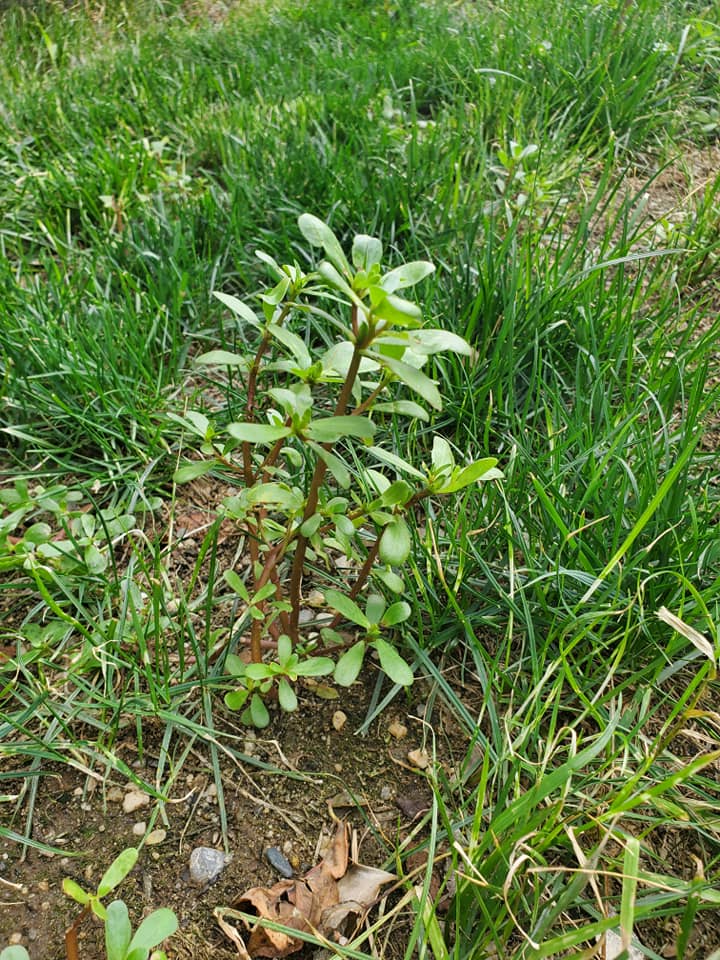

When it comes to lawn weeds, some property owners aren’t too concerned about the distinguishing features that differentiate one weed from another. However, when it comes to some look-alike weeds like spurge and purslane, it’s important to know the difference as spurges are poisonous and purslane is not. Spurges release a milky white sap that can be irritating to skin, so it’s a weed you should wear rubber gloves to handle and should also keep away from children and pets. Conversely, purslane weeds are wild edibles with tiny yellow flowers and almost always smaller than spurges. Here, we’ll explore the similarities between these lawn weeds in detail.
Key Differences Between Purslane and Spurge
Leaf Texture and Appearance:
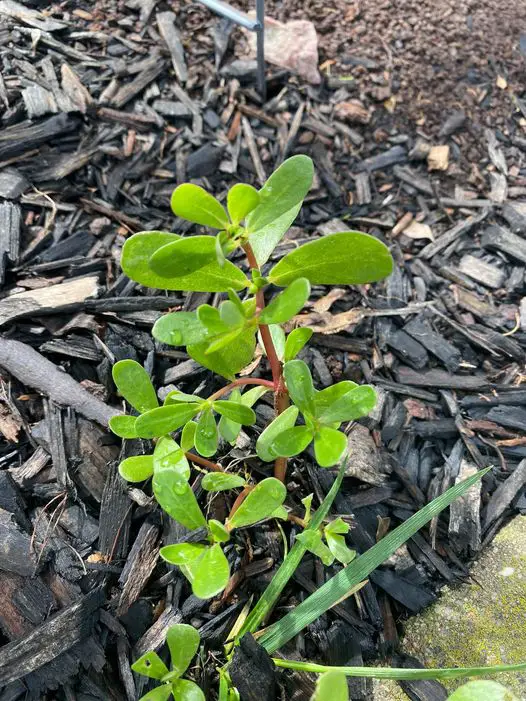
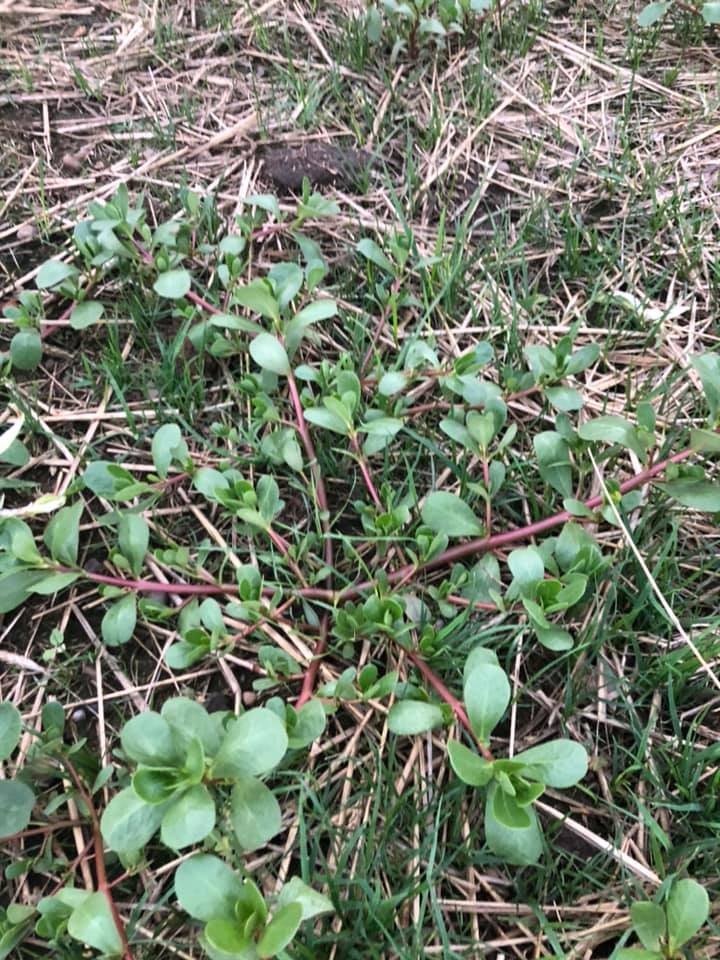
- Purslane (Portulaca oleracea): Fleshy, succulent leaves that resemble those of jade plants. Leaves are smooth, and stems are red and fleshy.
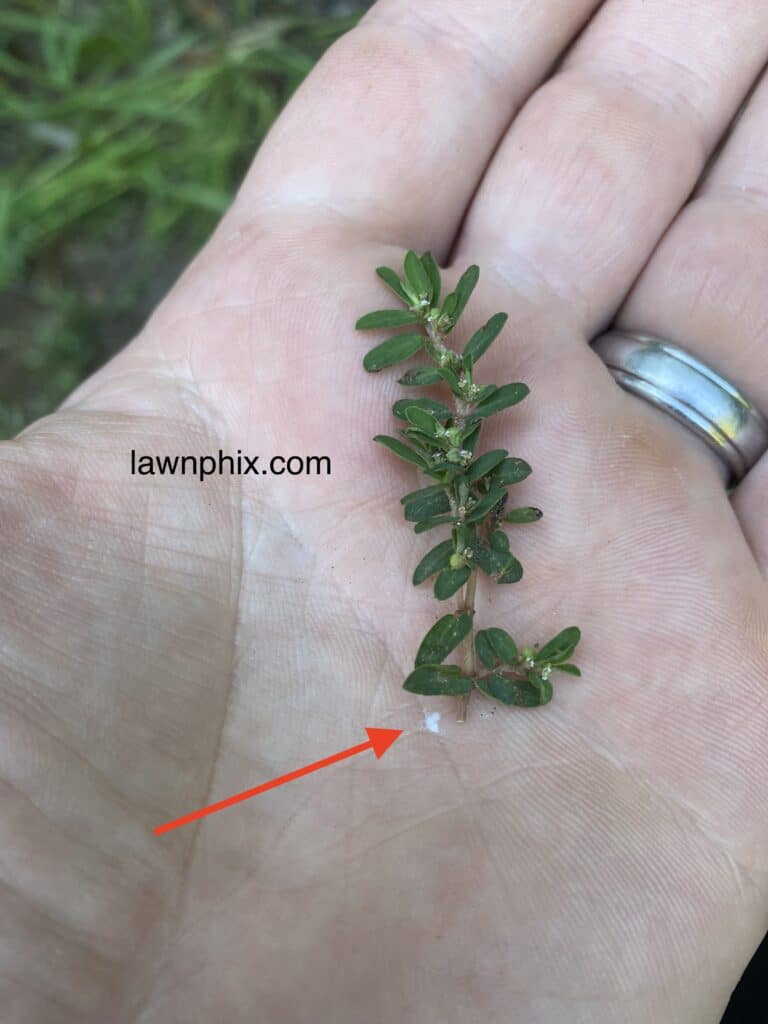
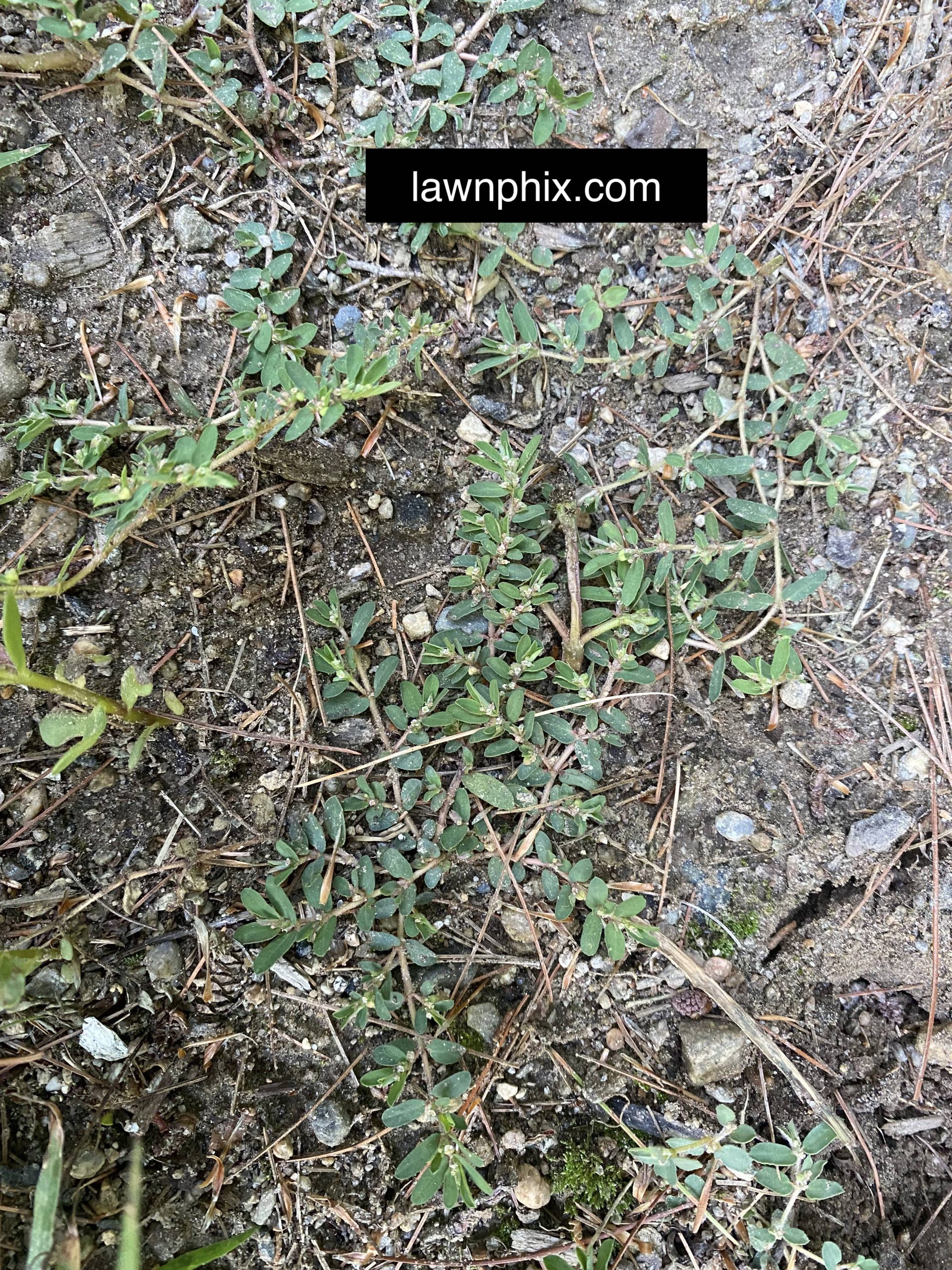
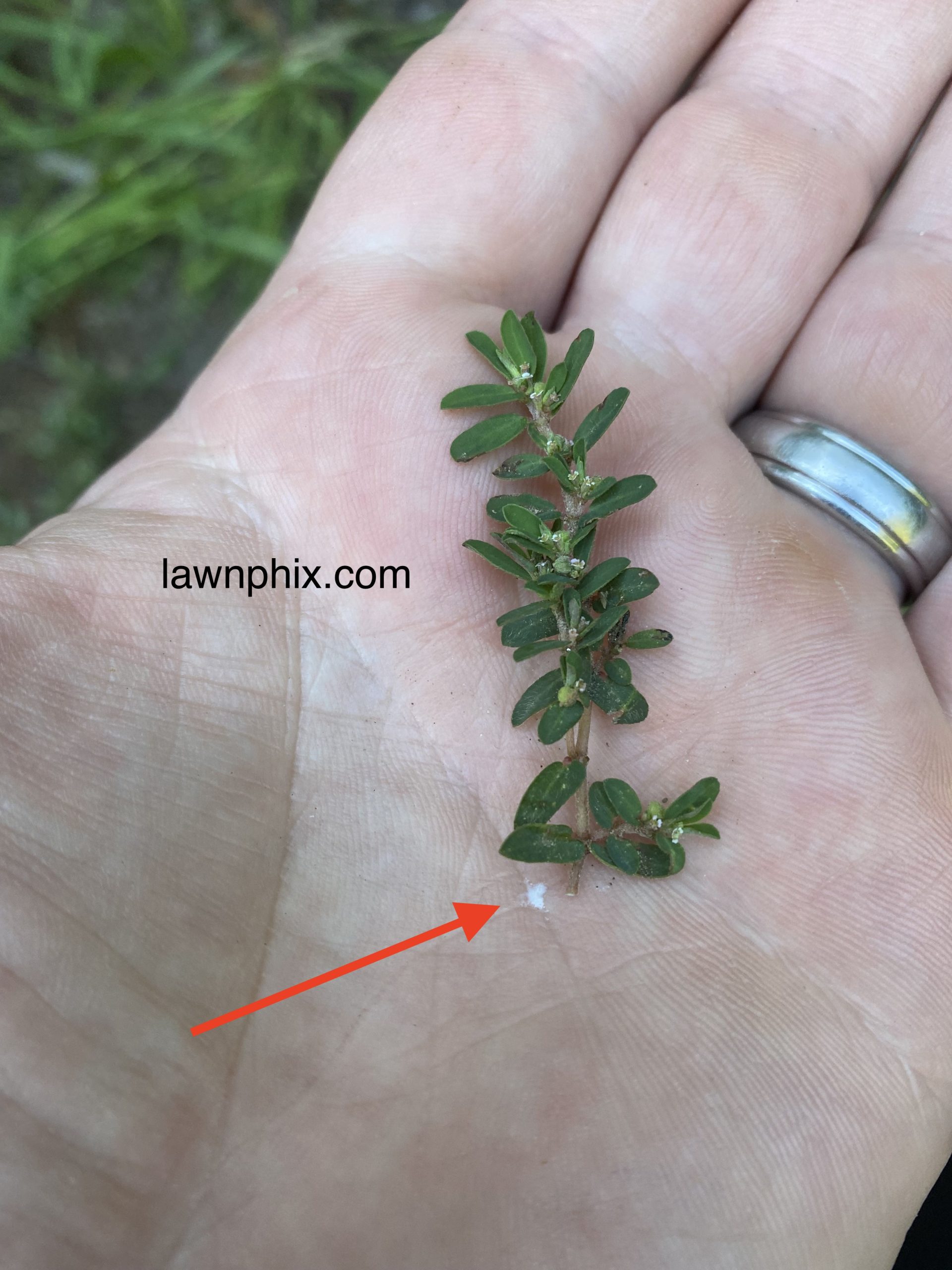
- Spotted Spurge (Euphorbia maculata): Flat, thin leaves with a reddish spot at the center. Stems are woody, hairy, and release a milky white sap when broken.
Flower Characteristics:
- Purslane: Produces small yellow flowers.
- Spurge: Produces small pink flowers.
Growth Habit:
- Purslane: More erect, with a prostrate growth pattern and thicker stems.
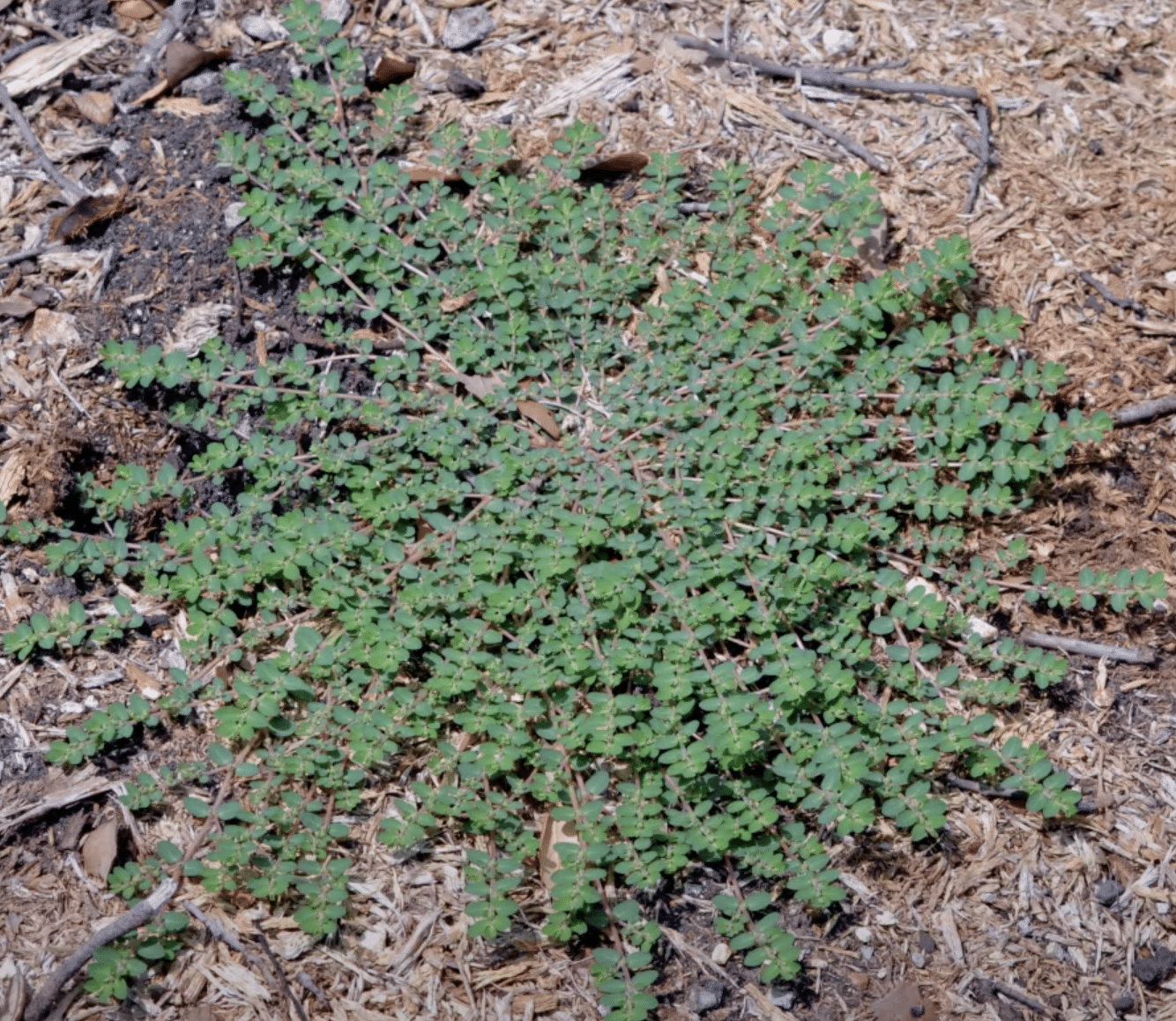
- Spurge: Creeping growth along the ground with thinner stems.
Edibility and Toxicity:
- Purslane: Edible and nutritious, often used in salads. Rich in omega-3 fatty acids.
- Spurge: Poisonous, causes skin and eye irritation, and can induce nausea, vomiting, and diarrhea if ingested.
Identification Tips
- Purslane: Look for succulent, smooth leaves and red, fleshy stems. No milky sap is present when stems are broken.
- Spurge: Identify by its flat, thin leaves with a reddish spot and milky sap from broken stems.
Similarities Between Spurge and Purslane
Both spurge and purslane share certain characteristics. Both of these wild plants will grow in lawns but will also sprout up in sidewalk cracks. Some species of these plants may even grow near one another. Both of these wild plants will happily take up residence in struggling lawns that have bare patches. Some similarities between these two are:
- Stems with reddish coloring
- At first glance, both appear to be sprawling plants
- Fast growing plants
- Rich green-colored leaves
What Is Spurge?
Spurge such as spotted spurge, aka Euphorbia maculata, is a fast-growing summer annual that can become a nuisance when growing in lawns and garden beds. Spurge growing in your lawn will look out of place and detract from your lawn’s health and curb appeal. Spurge is a poisonous plant that produces a milky white sap that can cause serious skin and eye irritation. Fortunately, spurge is not difficult to kill. You can use a broadleaf herbicide to rid your lawn and gardens of this noxious weed.
What Is Purslane?
Portulaca oleracea, more commonly known as purslane plant, that features succulent leaves and seed pods filled with tiny black seeds. Purslane, like other wild foods, is tasty and ideal for use in salad with its copious amounts of omega 3 fatty acids and other important nutrients. You can eat purslane and include it in purslane recipes when it’s property identified. Purslane plant produces small yellow flowers and does not produce milky sap like spurge. Although eating purslane is nutritious, you may not want it to grow in your lawn or gardens. To get rid of purslane growing in your landscape, you can treat it with Tzone, a selective broadleaf herbicide.
How poisonous is spurge?
- Spurge can cause severe nausea, vomiting, and diarrhea if ingested. Its milky sap can also cause serious skin and eye irritation.
Can I eat purslane from my yard?
- Yes, but ensure it is correctly identified as purslane and not treated with chemicals. Purslane is safe to eat and rich in nutrients.